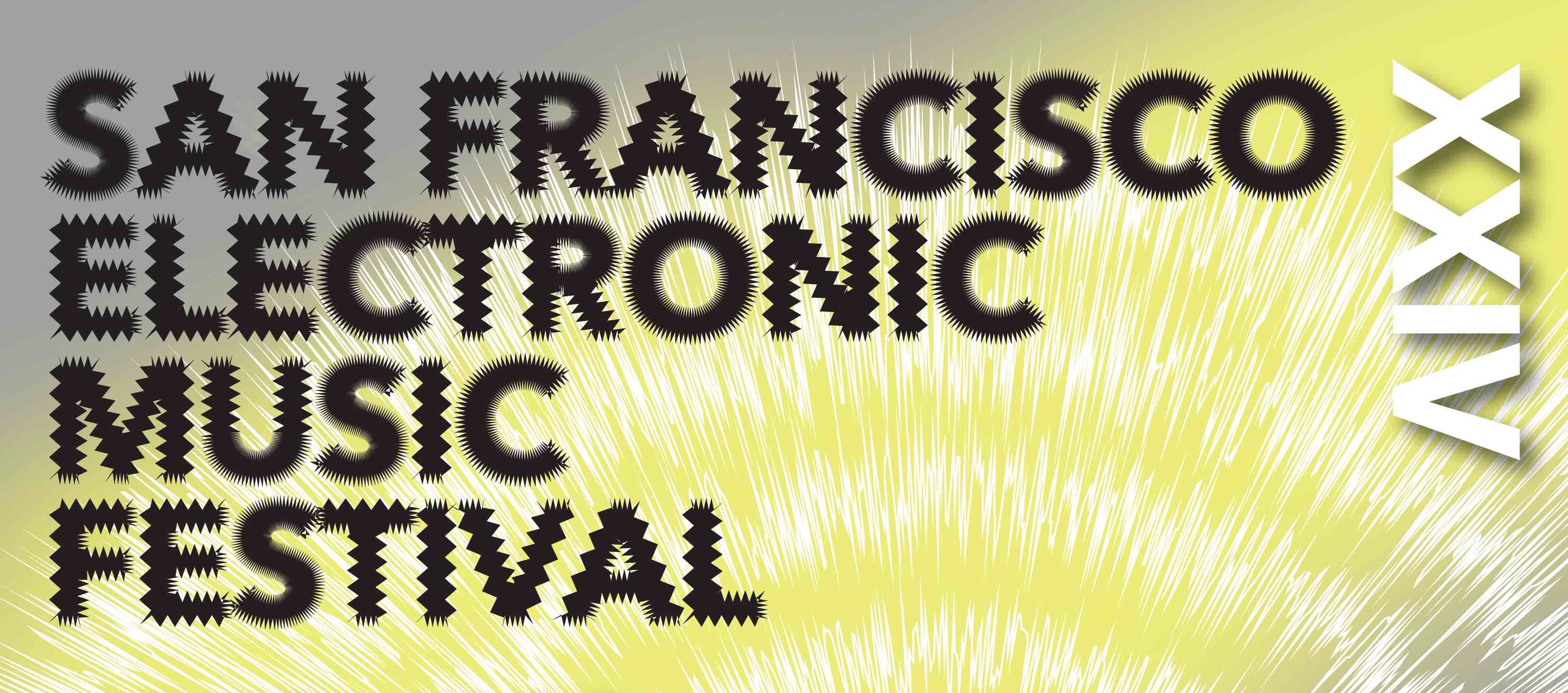
In a coproduction with Gray Area, SF Electronic Music Festival presents three nights of live electronic performances ranging from real-time generative composition to embodied improvisation, explorations of machine-learning to eradicate the human component of music making, to industrial dub rhythms, processed trance vocals, and oscillating hypnotic drones.
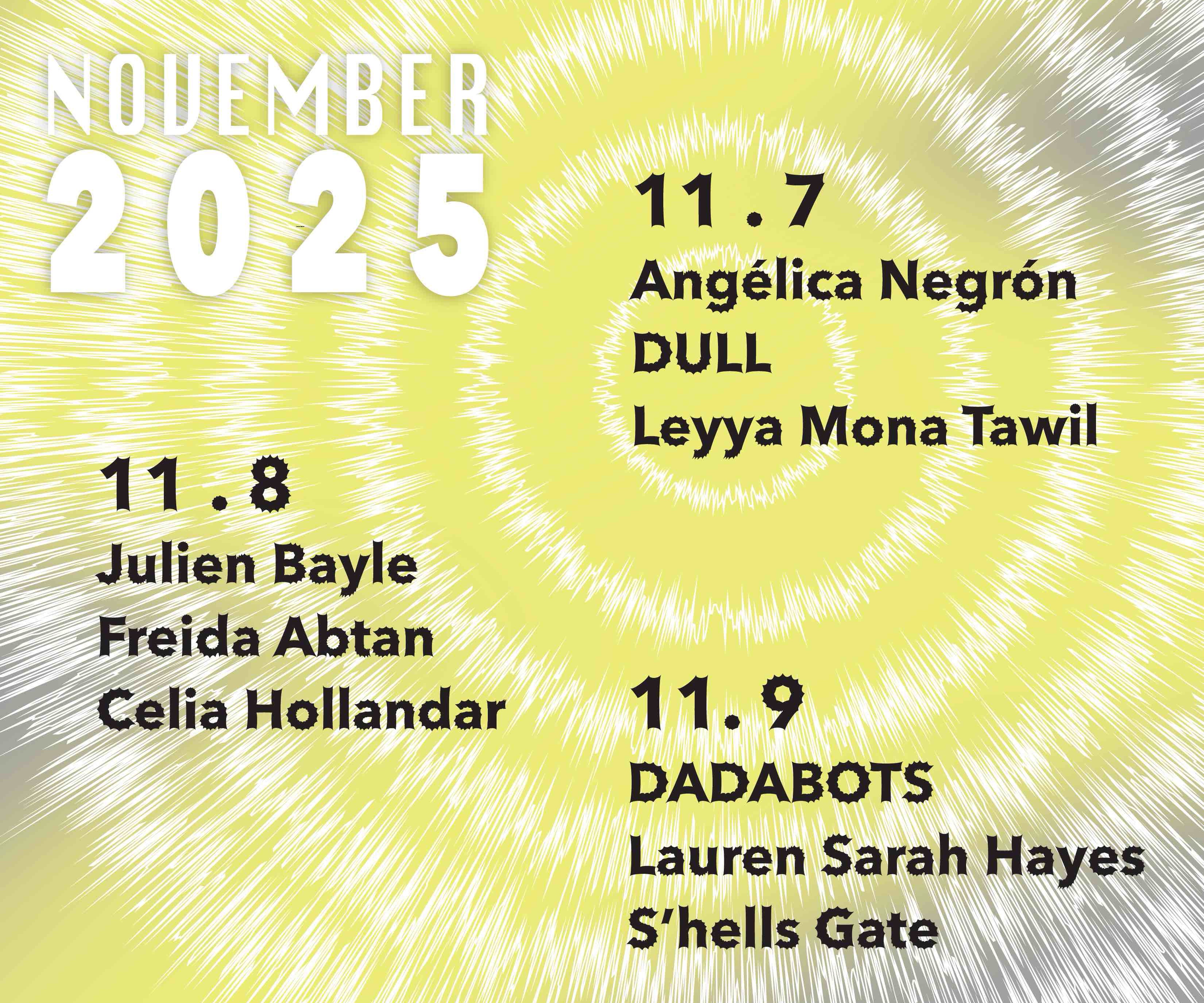
The festival begins on Friday, November 7, with Leyya Mona Tawil (also known as Lime Rickey International), who brings her embodied, interdisciplinary approach, creating a musical performance that incorporates sound objects, physical effects, and disappearing words. The artist DULL follows, combining instrumental mastery with live electronics, while balancing lab-coat meticulousness with a punk attitude. Friday night concludes with Angélica Negrón performing live electronics, incorporating her love of drag, comedy, and the natural world into her set.
Saturday, November 8, opens with Celia Hollander combining acoustic and digital elements, exploring music as a natural phenomenon of dynamic systems. "Audiovisual sorceress," Freida Abtan follows, weaving together acousmatic composition with more industrial and pop-influenced experimental anthems. Saturday's lineup closes with Julien Bayle performing super.system, a live performance uniting sound and image through real-time generative composition that is a living, mutable work where intention meets entropy.
The festival wraps up Sunday, November 9, with S'hells Gate, a three-piece outfit comprising members Jonathan Carr, Matt Brownell, and Cat Lauigan, who fuse elements of arpeggiated electronics, experimental poetry / processed trance vocals, oscillating hypnotic drones, and industrial dub rhythms. Lauren Sarah Hayes follows, exploring instability, vulnerability, and unpredictability through improvisation with her hybrid analogue-digital live electronics performance system, a form of embodied machine intelligence. With punk/metal roots, DADABOTS close the festival using machine-learning as an extreme way to make sound and eliminate humans from music.
show less
The festival begins on Friday, November 7, with Leyya Mona Tawil (also known as Lime Rickey International), who brings her embodied, interdisciplinary approach, creating a musical performance that incorporates sound objects, physical effects, and disappearing words. The artist DULL follows, combining instrumental mastery with live electronics, while balancing lab-coat meticulousness with a punk attitude. Friday night concludes with Angélica Negrón performing live electronics, incorporating her love of drag, comedy, and the natural world into her set.
Saturday, November 8, opens with Celia Hollander combining acoustic and digital elements, exploring music as a natural phenomenon of dynamic systems. "Audiovisual sorceress," Freida Abtan follows, weaving together acousmatic composition with more industrial and pop-influenced experimental anthems. Saturday's lineup closes with Julien Bayle performing super.system, a live performance uniting sound and image through real-time generative composition that is a living, mutable work where intention meets entropy.
The festival wraps up Sunday, November 9, with S'hells Gate, a three-piece outfit comprising members Jonathan Carr, Matt Brownell, and Cat Lauigan, who fuse elements of arpeggiated electronics, experimental poetry / processed trance vocals, oscillating hypnotic drones, and industrial dub rhythms. Lauren Sarah Hayes follows, exploring instability, vulnerability, and unpredictability through improvisation with her hybrid analogue-digital live electronics performance system, a form of embodied machine intelligence. With punk/metal roots, DADABOTS close the festival using machine-learning as an extreme way to make sound and eliminate humans from music.
In a coproduction with Gray Area, SF Electronic Music Festival presents three nights of live electronic performances ranging from real-time generative composition to embodied improvisation, explorations of machine-learning to eradicate the human component of music making, to industrial dub rhythms, processed trance vocals, and oscillating hypnotic drones.
The festival begins on Friday, November 7, with Leyya Mona Tawil (also known as Lime Rickey International), who brings her embodied, interdisciplinary approach, creating a musical performance that incorporates sound objects, physical effects, and disappearing words. The artist DULL follows, combining instrumental mastery with live electronics, while balancing lab-coat meticulousness with a punk attitude. Friday night concludes with Angélica Negrón performing live electronics, incorporating her love of drag, comedy, and the natural world into her set.
Saturday, November 8, opens with Celia Hollander combining acoustic and digital elements, exploring music as a natural phenomenon of dynamic systems. "Audiovisual sorceress," Freida Abtan follows, weaving together acousmatic composition with more industrial and pop-influenced experimental anthems. Saturday's lineup closes with Julien Bayle performing super.system, a live performance uniting sound and image through real-time generative composition that is a living, mutable work where intention meets entropy.
The festival wraps up Sunday, November 9, with S'hells Gate, a three-piece outfit comprising members Jonathan Carr, Matt Brownell, and Cat Lauigan, who fuse elements of arpeggiated electronics, experimental poetry / processed trance vocals, oscillating hypnotic drones, and industrial dub rhythms. Lauren Sarah Hayes follows, exploring instability, vulnerability, and unpredictability through improvisation with her hybrid analogue-digital live electronics performance system, a form of embodied machine intelligence. With punk/metal roots, DADABOTS close the festival using machine-learning as an extreme way to make sound and eliminate humans from music.
read more
The festival begins on Friday, November 7, with Leyya Mona Tawil (also known as Lime Rickey International), who brings her embodied, interdisciplinary approach, creating a musical performance that incorporates sound objects, physical effects, and disappearing words. The artist DULL follows, combining instrumental mastery with live electronics, while balancing lab-coat meticulousness with a punk attitude. Friday night concludes with Angélica Negrón performing live electronics, incorporating her love of drag, comedy, and the natural world into her set.
Saturday, November 8, opens with Celia Hollander combining acoustic and digital elements, exploring music as a natural phenomenon of dynamic systems. "Audiovisual sorceress," Freida Abtan follows, weaving together acousmatic composition with more industrial and pop-influenced experimental anthems. Saturday's lineup closes with Julien Bayle performing super.system, a live performance uniting sound and image through real-time generative composition that is a living, mutable work where intention meets entropy.
The festival wraps up Sunday, November 9, with S'hells Gate, a three-piece outfit comprising members Jonathan Carr, Matt Brownell, and Cat Lauigan, who fuse elements of arpeggiated electronics, experimental poetry / processed trance vocals, oscillating hypnotic drones, and industrial dub rhythms. Lauren Sarah Hayes follows, exploring instability, vulnerability, and unpredictability through improvisation with her hybrid analogue-digital live electronics performance system, a form of embodied machine intelligence. With punk/metal roots, DADABOTS close the festival using machine-learning as an extreme way to make sound and eliminate humans from music.
show less
Date/Times:
The Best Events
Every Week in Your Inbox

From Our Sponsors
UPCOMING EVENTS






Great suggestion! We'll be in touch.
Event reviewed successfully.