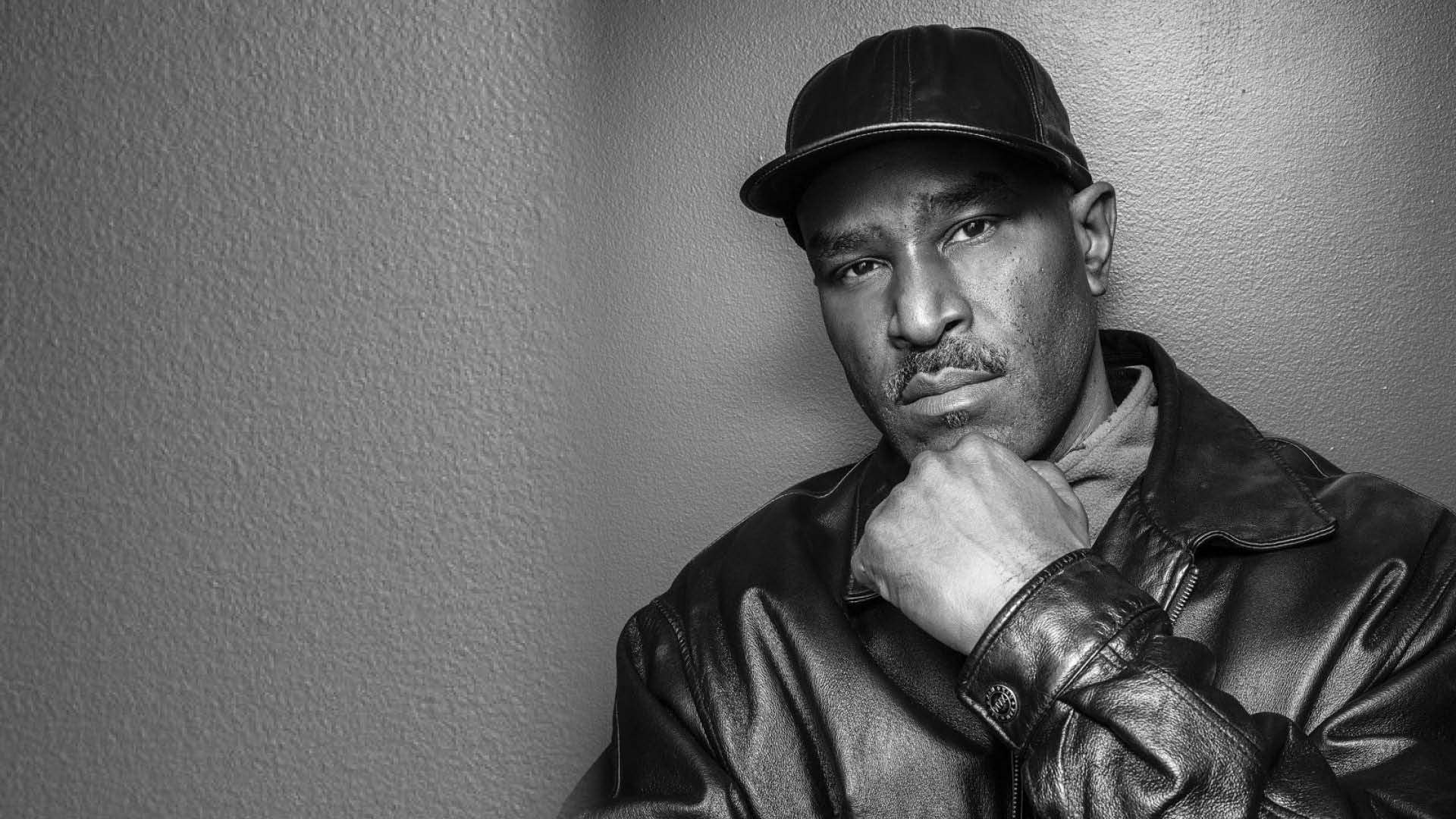
Night #1 of our celebration of the Miles Davis centennial focuses on the trumpet genius's final years and his landmark collaboration with hip-hop producer Easy Mo Bee that resulted in Davis's final artistic statement, the 1992 Warner Brothers album Doo-Bop. For this exclusive performance, Easy Mo Bee will be joined by a host of MCs and instrumentalists to honor the pioneering fusion of hip-hop and Miles's singular aesthetic -- a harmonious blend of genres and influences that has become commonplace in the wake of the album's release.
Over his nearly five-decade career, the constant in Miles Davis's career was change. In a now-famous interview with the Washington Post in 1969, Miles Davis told journalist Hollie West, "I have to change. It's like a curse." He would maintain this creative imperative until the end of his life.
Inspired by the sounds of hip-hop wafting into the open windows his Manhattan apartment during the summer of 1990, Davis connected with Easy Mo Bee -- a production savant whose work with Big Daddy Kane, the Notorious B.I.G., Mos Def, and Tupac Shakur made him a star.
Recording parts for the album the month before his death, Davis remained at the forefront of innovation with this final session -- a release that won the 1993 GRAMMY for Best R&B Instrumental Performance.
show less
Over his nearly five-decade career, the constant in Miles Davis's career was change. In a now-famous interview with the Washington Post in 1969, Miles Davis told journalist Hollie West, "I have to change. It's like a curse." He would maintain this creative imperative until the end of his life.
Inspired by the sounds of hip-hop wafting into the open windows his Manhattan apartment during the summer of 1990, Davis connected with Easy Mo Bee -- a production savant whose work with Big Daddy Kane, the Notorious B.I.G., Mos Def, and Tupac Shakur made him a star.
Recording parts for the album the month before his death, Davis remained at the forefront of innovation with this final session -- a release that won the 1993 GRAMMY for Best R&B Instrumental Performance.
Night #1 of our celebration of the Miles Davis centennial focuses on the trumpet genius's final years and his landmark collaboration with hip-hop producer Easy Mo Bee that resulted in Davis's final artistic statement, the 1992 Warner Brothers album Doo-Bop. For this exclusive performance, Easy Mo Bee will be joined by a host of MCs and instrumentalists to honor the pioneering fusion of hip-hop and Miles's singular aesthetic -- a harmonious blend of genres and influences that has become commonplace in the wake of the album's release.
Over his nearly five-decade career, the constant in Miles Davis's career was change. In a now-famous interview with the Washington Post in 1969, Miles Davis told journalist Hollie West, "I have to change. It's like a curse." He would maintain this creative imperative until the end of his life.
Inspired by the sounds of hip-hop wafting into the open windows his Manhattan apartment during the summer of 1990, Davis connected with Easy Mo Bee -- a production savant whose work with Big Daddy Kane, the Notorious B.I.G., Mos Def, and Tupac Shakur made him a star.
Recording parts for the album the month before his death, Davis remained at the forefront of innovation with this final session -- a release that won the 1993 GRAMMY for Best R&B Instrumental Performance.
read more
Over his nearly five-decade career, the constant in Miles Davis's career was change. In a now-famous interview with the Washington Post in 1969, Miles Davis told journalist Hollie West, "I have to change. It's like a curse." He would maintain this creative imperative until the end of his life.
Inspired by the sounds of hip-hop wafting into the open windows his Manhattan apartment during the summer of 1990, Davis connected with Easy Mo Bee -- a production savant whose work with Big Daddy Kane, the Notorious B.I.G., Mos Def, and Tupac Shakur made him a star.
Recording parts for the album the month before his death, Davis remained at the forefront of innovation with this final session -- a release that won the 1993 GRAMMY for Best R&B Instrumental Performance.
show less
Date/Times:
The Best Events
Every Week in Your Inbox

From Our Sponsors
UPCOMING EVENTS







Great suggestion! We'll be in touch.
Event reviewed successfully.