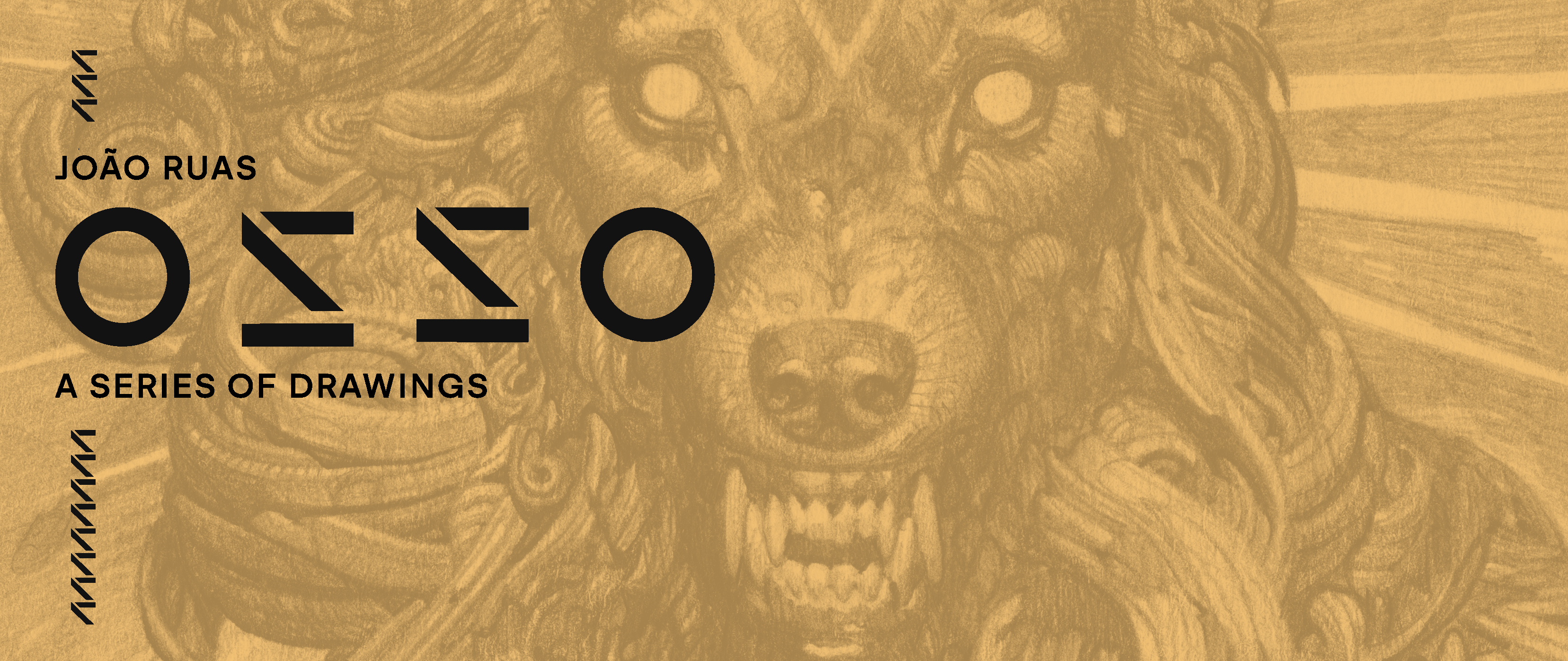
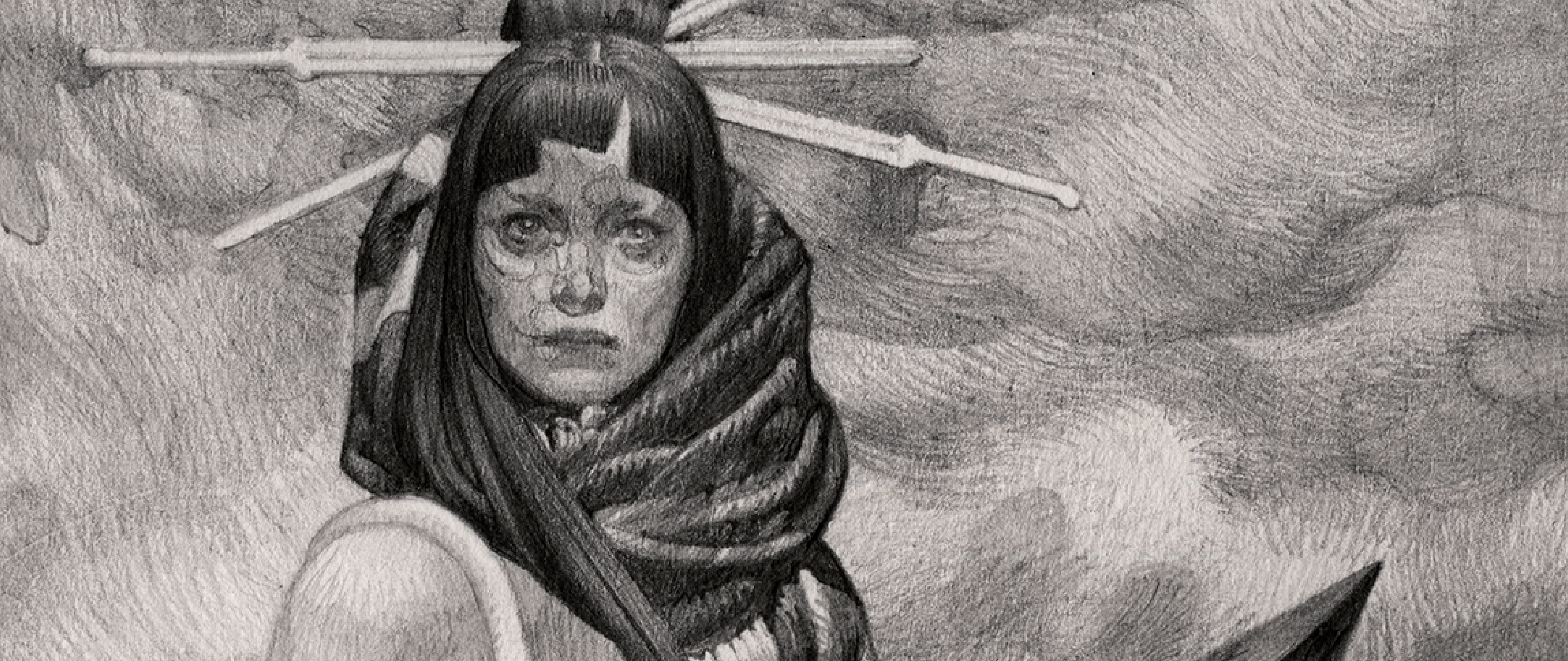
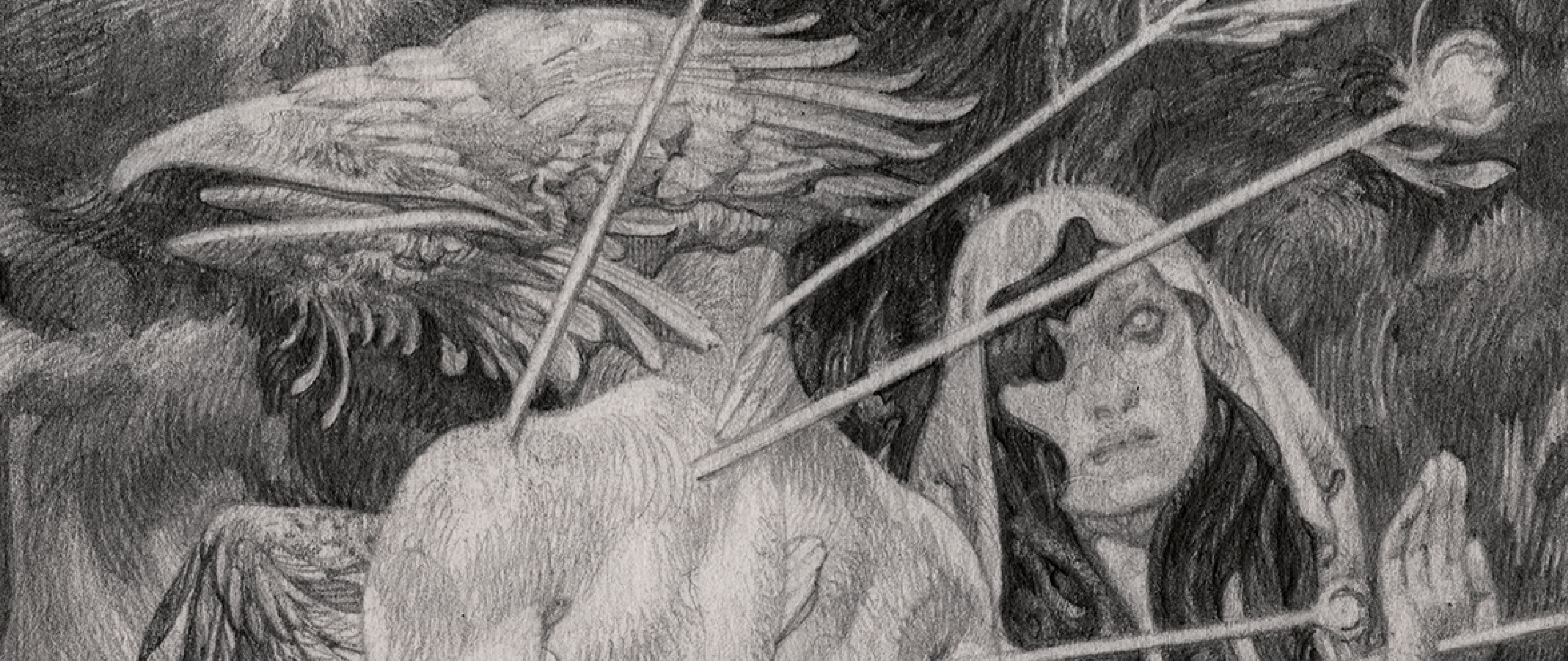
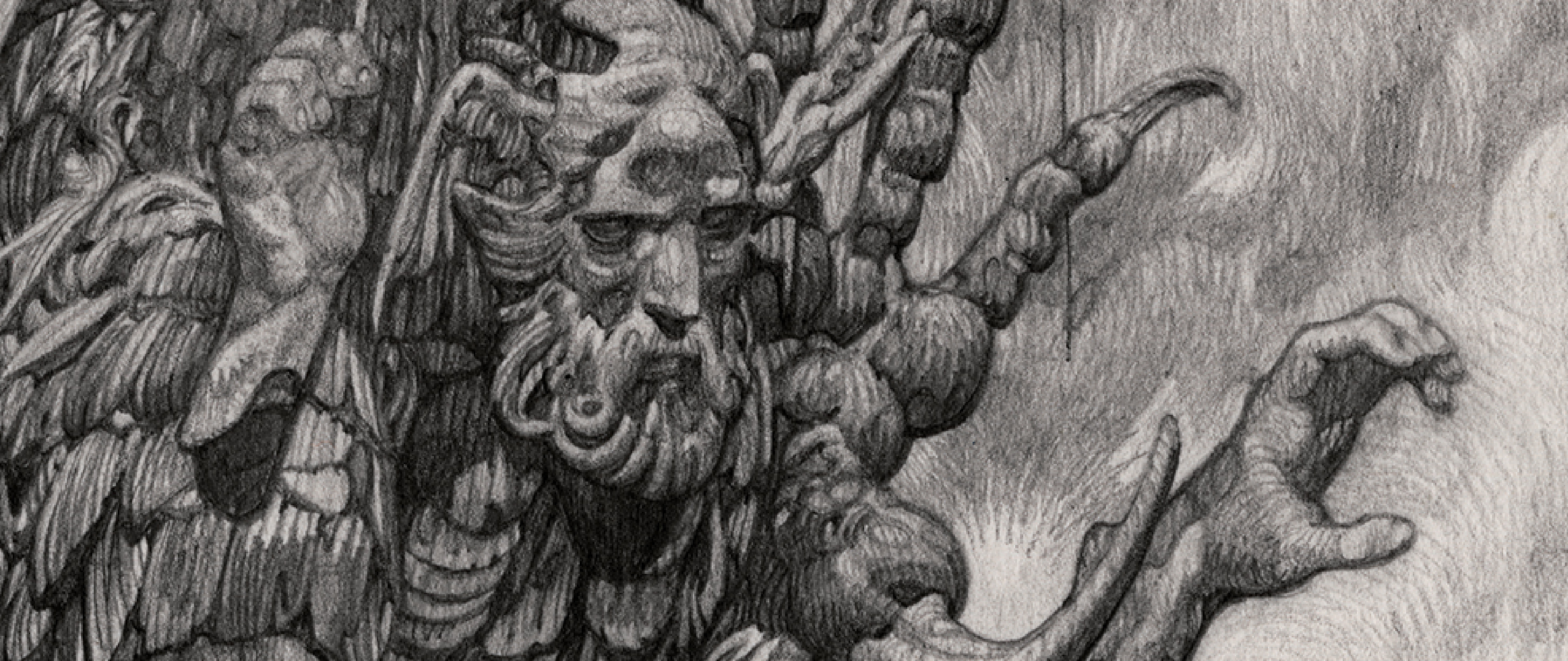
Brazilian artist João Ruas began his "OSSO" series during the lockdowns of 2020, as a way of creating something that would allow him to escape reality, and that could be produced more quickly than paintings. The ongoing realities of today continue to lend themself to escapism, which is why, six years on, Ruas continues producing this series. The process follows two rules: the same materials are used, just graphite and paper, and the drawings have the same dimensions. Reflecting back, Ruas believes that Goya's "Caprichos" and Jean Giraud's "Forty Days in the Desert," two series he greatly admires, may have had some influence during the conception.
This chosen technique, pencil, is Ruas's favorite way of expressing the ideas and scenarios that make up his internal mythology, a concept he has been developing for years. A human amalgam that seeks to unite the most disparate traditions and artistic expressions separated by geography and time itself.
This exhibition features 19 works, although the series already comprises more than 50 completed drawings.
show less
This chosen technique, pencil, is Ruas's favorite way of expressing the ideas and scenarios that make up his internal mythology, a concept he has been developing for years. A human amalgam that seeks to unite the most disparate traditions and artistic expressions separated by geography and time itself.
This exhibition features 19 works, although the series already comprises more than 50 completed drawings.
Brazilian artist João Ruas began his "OSSO" series during the lockdowns of 2020, as a way of creating something that would allow him to escape reality, and that could be produced more quickly than paintings. The ongoing realities of today continue to lend themself to escapism, which is why, six years on, Ruas continues producing this series. The process follows two rules: the same materials are used, just graphite and paper, and the drawings have the same dimensions. Reflecting back, Ruas believes that Goya's "Caprichos" and Jean Giraud's "Forty Days in the Desert," two series he greatly admires, may have had some influence during the conception.
This chosen technique, pencil, is Ruas's favorite way of expressing the ideas and scenarios that make up his internal mythology, a concept he has been developing for years. A human amalgam that seeks to unite the most disparate traditions and artistic expressions separated by geography and time itself.
This exhibition features 19 works, although the series already comprises more than 50 completed drawings.
read more
This chosen technique, pencil, is Ruas's favorite way of expressing the ideas and scenarios that make up his internal mythology, a concept he has been developing for years. A human amalgam that seeks to unite the most disparate traditions and artistic expressions separated by geography and time itself.
This exhibition features 19 works, although the series already comprises more than 50 completed drawings.
show less
Date/Times:
The Best Events
Every Week in Your Inbox

From Our Sponsors
UPCOMING EVENTS







Great suggestion! We'll be in touch.
Event reviewed successfully.