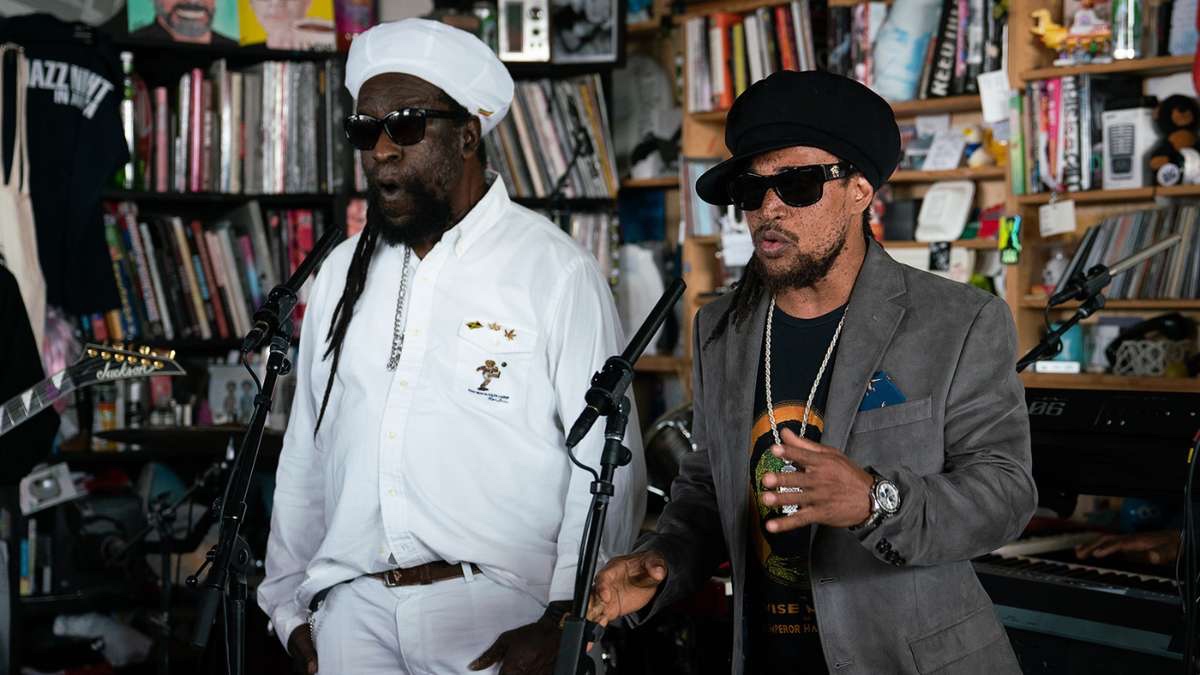
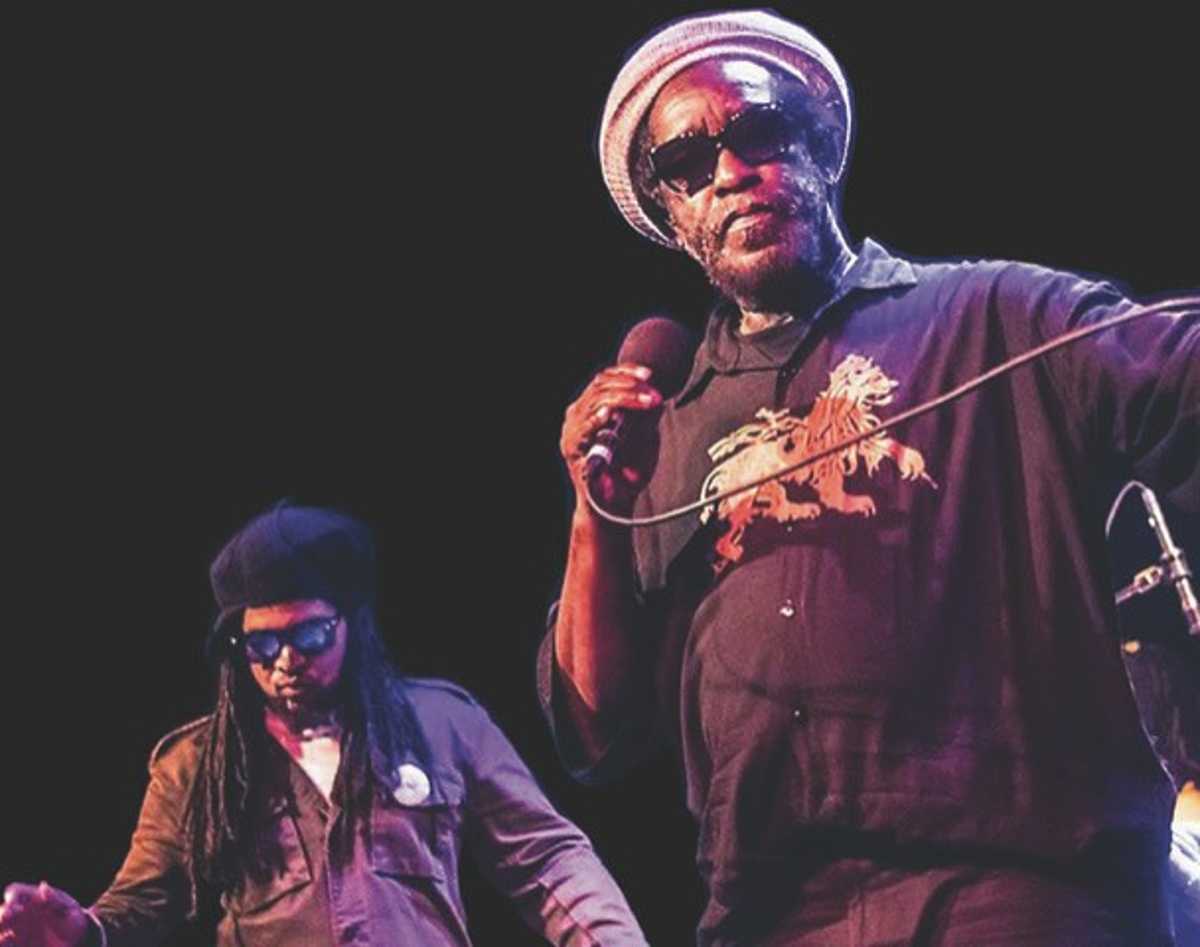
For over 50 years Black Uhuru has remained one of the most recognized and prolific reggae bands from Jamaica. The living legends have earned several achievements in the music industry including winning the first-ever Grammy Award for Best Reggae Album. Their long success along of having the highest reggae record sales after Bob Marley, and the most songs sampled by other artists over the years, has allowed them to become ambassadors of the reggae genre.
The roots of Black Uhuru formed in Kingston's "Waterhouse" District in the late 60's. It is the home of founder & leader Derrick "Duckie" Simpson along with all the rest of the singers from the group. The original Uhuru's Swahili for "freedom" were Duckie, Don Carlos & Garth Dennis. The first song was a Curtis Mayfield cover of "Folk Song." They made only a couple more songs before Don left to pursue a solo career and Garth joined Wailing Souls. The two were replaced by Michael Rose and Errol Nelson, both from Waterhouse. They recorded the debut album Love Crises in 1977 for Prince Jammy later re-released as Black Sounds of Freedom. Errol later left the group to join the Jays and was replaced by female singer Puma Jones.
With this new lineup, the band began to collaborate with Sly & Robbie and developed the classic "Uhuru sound" of the '80s. A unique style full of heavy drum and bass, sharp keys, loud guitar riffs and long instrumentals filled with whirly background effects and the signature "wow oh-oh oh's" echo. It was during this period they signed with Island Records. They began touring internationally and started receiving worldwide attention. They recorded some of their most popular albums like Guess Who's Coming To Dinner, Sensimelia, and Chill Out. The album Red was voted #23 for Rolling Stone Magazine's list of 100 greatest albums of the '80s. And history was made when they won reggae's first Grammy Award in 1984 for the album Anthem.
---------
Black Uhuru, one of reggae's all time super groups and celebrated pioneers are back with a vengeance!
Five-Star General, Duckie Gong Simpson and his Lion Lieutenant, Andrew Bees, lead Black Uhuru's entrancing musical warriors into 2011 in the spirit of the true Rasta. Black Uhuru (which translates as "freedom" in Swahili), remain planted in their cultural roots of musical, political and spiritual convictions.
Back in the day, Black Uhuru broke the mold touring worldwide with The Clash, The Police and Rolling Stones, to name a few. Black Uhuru, the honored recipients of the first Grammy Award ever for reggae music, are at it again and are better and stronger than ever before performing songs from their forthcoming new album as well as their timeless hits.
Black Uhuru, known for their revolutionary attitudes both on and off the stage, unleash upon the world a dynamic production for its veteran fan base to embrace while allowing its new recruitment of fans to experience their inspiring lyrics, layered vocal harmonies, drum and bass rhythms, and the trademark Black Uhuru legacy which is permanently woven throughout music history. Black Uhuru's roots are deep, their shows are fierce and they, like their music, remain innovative and progressive to this day.
show less
The roots of Black Uhuru formed in Kingston's "Waterhouse" District in the late 60's. It is the home of founder & leader Derrick "Duckie" Simpson along with all the rest of the singers from the group. The original Uhuru's Swahili for "freedom" were Duckie, Don Carlos & Garth Dennis. The first song was a Curtis Mayfield cover of "Folk Song." They made only a couple more songs before Don left to pursue a solo career and Garth joined Wailing Souls. The two were replaced by Michael Rose and Errol Nelson, both from Waterhouse. They recorded the debut album Love Crises in 1977 for Prince Jammy later re-released as Black Sounds of Freedom. Errol later left the group to join the Jays and was replaced by female singer Puma Jones.
With this new lineup, the band began to collaborate with Sly & Robbie and developed the classic "Uhuru sound" of the '80s. A unique style full of heavy drum and bass, sharp keys, loud guitar riffs and long instrumentals filled with whirly background effects and the signature "wow oh-oh oh's" echo. It was during this period they signed with Island Records. They began touring internationally and started receiving worldwide attention. They recorded some of their most popular albums like Guess Who's Coming To Dinner, Sensimelia, and Chill Out. The album Red was voted #23 for Rolling Stone Magazine's list of 100 greatest albums of the '80s. And history was made when they won reggae's first Grammy Award in 1984 for the album Anthem.
---------
Black Uhuru, one of reggae's all time super groups and celebrated pioneers are back with a vengeance!
Five-Star General, Duckie Gong Simpson and his Lion Lieutenant, Andrew Bees, lead Black Uhuru's entrancing musical warriors into 2011 in the spirit of the true Rasta. Black Uhuru (which translates as "freedom" in Swahili), remain planted in their cultural roots of musical, political and spiritual convictions.
Back in the day, Black Uhuru broke the mold touring worldwide with The Clash, The Police and Rolling Stones, to name a few. Black Uhuru, the honored recipients of the first Grammy Award ever for reggae music, are at it again and are better and stronger than ever before performing songs from their forthcoming new album as well as their timeless hits.
Black Uhuru, known for their revolutionary attitudes both on and off the stage, unleash upon the world a dynamic production for its veteran fan base to embrace while allowing its new recruitment of fans to experience their inspiring lyrics, layered vocal harmonies, drum and bass rhythms, and the trademark Black Uhuru legacy which is permanently woven throughout music history. Black Uhuru's roots are deep, their shows are fierce and they, like their music, remain innovative and progressive to this day.
For over 50 years Black Uhuru has remained one of the most recognized and prolific reggae bands from Jamaica. The living legends have earned several achievements in the music industry including winning the first-ever Grammy Award for Best Reggae Album. Their long success along of having the highest reggae record sales after Bob Marley, and the most songs sampled by other artists over the years, has allowed them to become ambassadors of the reggae genre.
The roots of Black Uhuru formed in Kingston's "Waterhouse" District in the late 60's. It is the home of founder & leader Derrick "Duckie" Simpson along with all the rest of the singers from the group. The original Uhuru's Swahili for "freedom" were Duckie, Don Carlos & Garth Dennis. The first song was a Curtis Mayfield cover of "Folk Song." They made only a couple more songs before Don left to pursue a solo career and Garth joined Wailing Souls. The two were replaced by Michael Rose and Errol Nelson, both from Waterhouse. They recorded the debut album Love Crises in 1977 for Prince Jammy later re-released as Black Sounds of Freedom. Errol later left the group to join the Jays and was replaced by female singer Puma Jones.
With this new lineup, the band began to collaborate with Sly & Robbie and developed the classic "Uhuru sound" of the '80s. A unique style full of heavy drum and bass, sharp keys, loud guitar riffs and long instrumentals filled with whirly background effects and the signature "wow oh-oh oh's" echo. It was during this period they signed with Island Records. They began touring internationally and started receiving worldwide attention. They recorded some of their most popular albums like Guess Who's Coming To Dinner, Sensimelia, and Chill Out. The album Red was voted #23 for Rolling Stone Magazine's list of 100 greatest albums of the '80s. And history was made when they won reggae's first Grammy Award in 1984 for the album Anthem.
---------
Black Uhuru, one of reggae's all time super groups and celebrated pioneers are back with a vengeance!
Five-Star General, Duckie Gong Simpson and his Lion Lieutenant, Andrew Bees, lead Black Uhuru's entrancing musical warriors into 2011 in the spirit of the true Rasta. Black Uhuru (which translates as "freedom" in Swahili), remain planted in their cultural roots of musical, political and spiritual convictions.
Back in the day, Black Uhuru broke the mold touring worldwide with The Clash, The Police and Rolling Stones, to name a few. Black Uhuru, the honored recipients of the first Grammy Award ever for reggae music, are at it again and are better and stronger than ever before performing songs from their forthcoming new album as well as their timeless hits.
Black Uhuru, known for their revolutionary attitudes both on and off the stage, unleash upon the world a dynamic production for its veteran fan base to embrace while allowing its new recruitment of fans to experience their inspiring lyrics, layered vocal harmonies, drum and bass rhythms, and the trademark Black Uhuru legacy which is permanently woven throughout music history. Black Uhuru's roots are deep, their shows are fierce and they, like their music, remain innovative and progressive to this day.
read more
The roots of Black Uhuru formed in Kingston's "Waterhouse" District in the late 60's. It is the home of founder & leader Derrick "Duckie" Simpson along with all the rest of the singers from the group. The original Uhuru's Swahili for "freedom" were Duckie, Don Carlos & Garth Dennis. The first song was a Curtis Mayfield cover of "Folk Song." They made only a couple more songs before Don left to pursue a solo career and Garth joined Wailing Souls. The two were replaced by Michael Rose and Errol Nelson, both from Waterhouse. They recorded the debut album Love Crises in 1977 for Prince Jammy later re-released as Black Sounds of Freedom. Errol later left the group to join the Jays and was replaced by female singer Puma Jones.
With this new lineup, the band began to collaborate with Sly & Robbie and developed the classic "Uhuru sound" of the '80s. A unique style full of heavy drum and bass, sharp keys, loud guitar riffs and long instrumentals filled with whirly background effects and the signature "wow oh-oh oh's" echo. It was during this period they signed with Island Records. They began touring internationally and started receiving worldwide attention. They recorded some of their most popular albums like Guess Who's Coming To Dinner, Sensimelia, and Chill Out. The album Red was voted #23 for Rolling Stone Magazine's list of 100 greatest albums of the '80s. And history was made when they won reggae's first Grammy Award in 1984 for the album Anthem.
---------
Black Uhuru, one of reggae's all time super groups and celebrated pioneers are back with a vengeance!
Five-Star General, Duckie Gong Simpson and his Lion Lieutenant, Andrew Bees, lead Black Uhuru's entrancing musical warriors into 2011 in the spirit of the true Rasta. Black Uhuru (which translates as "freedom" in Swahili), remain planted in their cultural roots of musical, political and spiritual convictions.
Back in the day, Black Uhuru broke the mold touring worldwide with The Clash, The Police and Rolling Stones, to name a few. Black Uhuru, the honored recipients of the first Grammy Award ever for reggae music, are at it again and are better and stronger than ever before performing songs from their forthcoming new album as well as their timeless hits.
Black Uhuru, known for their revolutionary attitudes both on and off the stage, unleash upon the world a dynamic production for its veteran fan base to embrace while allowing its new recruitment of fans to experience their inspiring lyrics, layered vocal harmonies, drum and bass rhythms, and the trademark Black Uhuru legacy which is permanently woven throughout music history. Black Uhuru's roots are deep, their shows are fierce and they, like their music, remain innovative and progressive to this day.
show less
Date/Times:
The Best Events
Every Week in Your Inbox

From Our Sponsors
UPCOMING EVENTS








Great suggestion! We'll be in touch.
Event reviewed successfully.