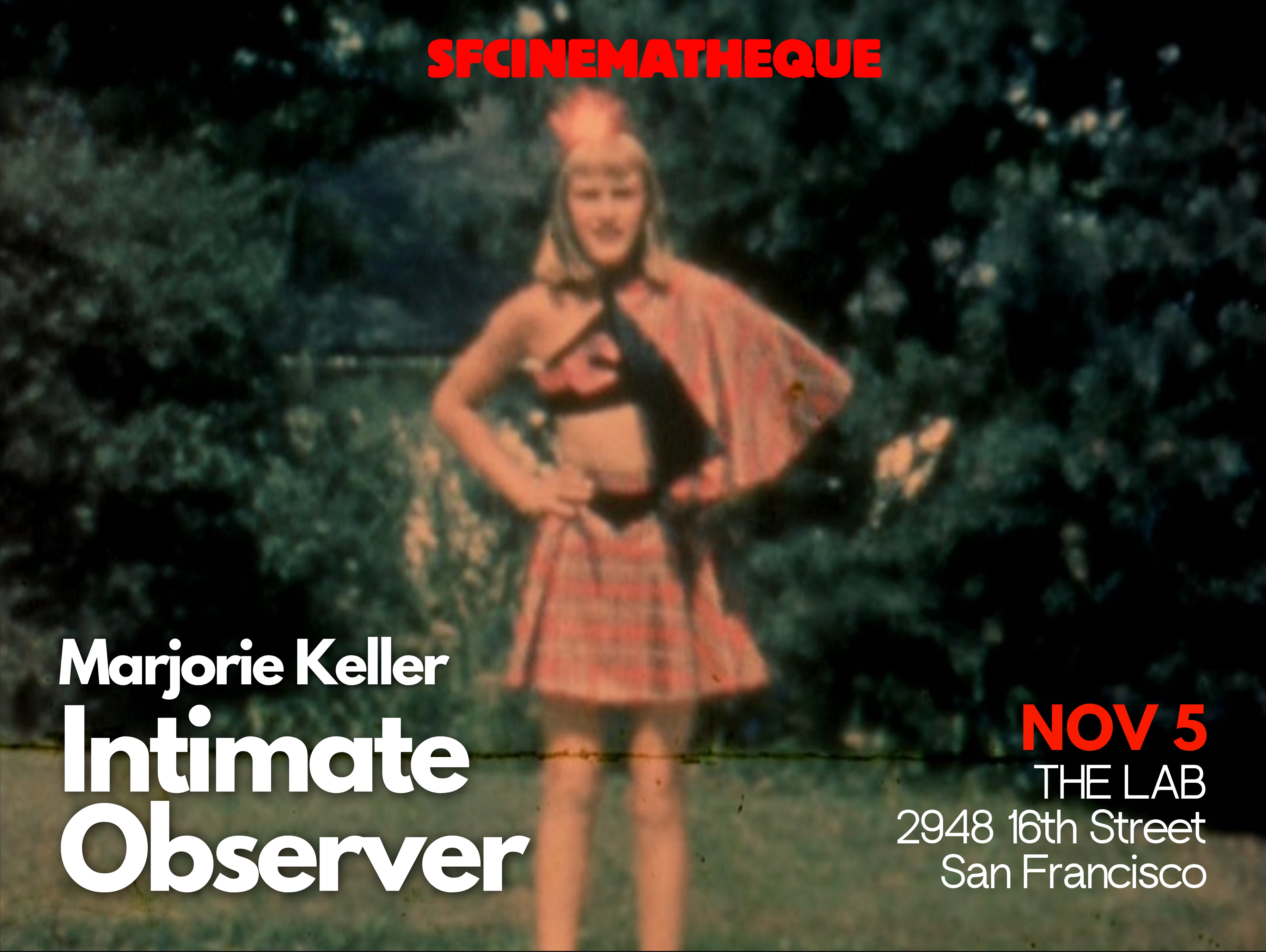
Marjorie Keller was one of the most significant figures in late 20th century American experimental film. A profoundly original artist, scholar, teacher and advocate, Keller was staunchly feminist without limiting herself to that movement's ideological orthodoxies. Fiercely independent, her work was sharply critical of the customary role women were relegated to in patriarchal society, even as she embraced aspects of traditional family life. Keller cherished the mostly male history of avant-garde filmmaking, but she was one of the foremost advocates for women film artists throughout her life. When she died at age 43 in 1994, Keller had already produced twenty-seven 8mm and 16mm films. They were remarkable for their thematic and poetical complexity and by investigating her domestic life as a woman for their starting point. Her expressive cinematography and intricate montage were sensual, emotional and intellectually challenging, and while she was clearly influenced by such predecessors as Marie Menken, Stan Brakhage and Saul Levine, Keller's cinematic voice was distinctly her own from beginning with her first film. (Steve Anker)
show less
Marjorie Keller was one of the most significant figures in late 20th century American experimental film. A profoundly original artist, scholar, teacher and advocate, Keller was staunchly feminist without limiting herself to that movement's ideological orthodoxies. Fiercely independent, her work was sharply critical of the customary role women were relegated to in patriarchal society, even as she embraced aspects of traditional family life. Keller cherished the mostly male history of avant-garde filmmaking, but she was one of the foremost advocates for women film artists throughout her life. When she died at age 43 in 1994, Keller had already produced twenty-seven 8mm and 16mm films. They were remarkable for their thematic and poetical complexity and by investigating her domestic life as a woman for their starting point. Her expressive cinematography and intricate montage were sensual, emotional and intellectually challenging, and while she was clearly influenced by such predecessors as Marie Menken, Stan Brakhage and Saul Levine, Keller's cinematic voice was distinctly her own from beginning with her first film. (Steve Anker)
read more
show less
Date/Times:
The Best Events
Every Week in Your Inbox

From Our Sponsors
UPCOMING EVENTS




Great suggestion! We'll be in touch.
Event reviewed successfully.